How to Write a Sales Proposal That Gets Signed
- No invented stats
- Written for UK readers
- 5 min read
- Published 14 October 2026
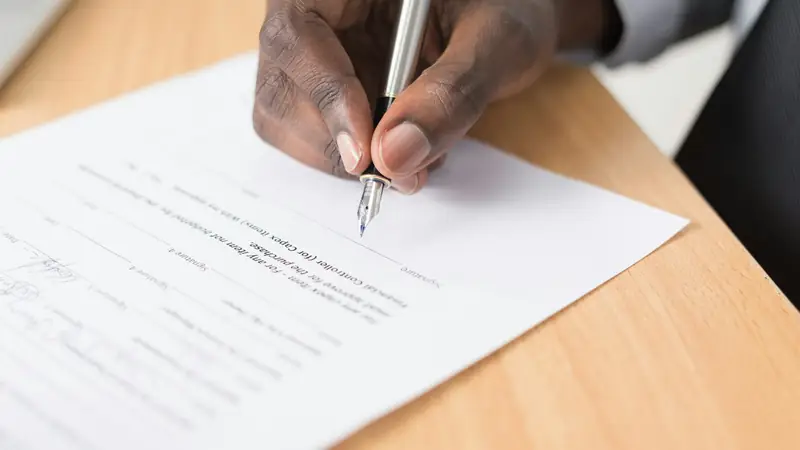
A proposal is not a sales pitch. It's a document your champion will forward to people you've never met, who will read it without you there to explain anything. Write it for those readers and it does its job. Write it as a brochure about your company and it gets skimmed, filed and forgotten.
That single reframe — this document has to work in your absence — decides most of what should be in it.
What a proposal is for
Three jobs, in order:
- Prove you understood the problem. If the buyer doesn't recognise their own situation in your first page, nothing after it matters.
- Make the decision easy to explain to someone else. Your champion has to justify this internally. Give them the words.
- Remove ambiguity. What you'll do, what it costs, what happens when, who does what.
Nothing on that list requires a page about your company's founding story.
The structure that works
1. A one-page summary
Assume a senior reader gets exactly this page. It should contain the problem in their words, what you're proposing, the price, and the timeline. Four short paragraphs or a handful of bullets. If your summary needs two pages, the proposal is too complicated.
2. Their situation, in their language
Restate what they told you during discovery — specifics, not generic industry observations.
"Your finance team currently rebuilds the month-end report by hand from three systems. It takes two people about two days, it delays your board pack, and the manual step has caused errors that took a week to unpick. You want this resolved before the new financial year in April."
This paragraph does more work than anything else in the document. It proves you listened, and it gives internal readers who weren't in the meetings the context they need. If you can't write it with this level of specificity, you don't have enough discovery to be writing a proposal at all — go back and ask better discovery questions first.
3. What you propose to do
Plain description of the solution in terms of outcomes, with features underneath. Buyers care what changes on Monday morning, not which modules are included.
Be explicit about what's not included. This feels like weakening your case; it does the opposite. Clear exclusions prevent scope arguments later and signal that you've thought the work through.
4. Scope, responsibilities and timeline
A simple table of phases, dates and owners. Include what you need from them — data, access, a named contact, sign-off at particular points. Projects slip because the client side underestimated their own workload, and a proposal that names those obligations up front protects both parties.
5. Pricing
Covered properly below, because many proposals get this wrong.
6. Terms that matter commercially
Contract length, payment schedule, notice period, what happens at renewal. Put these in the proposal rather than saving them for the contract. Surprises at signature stage cost you weeks and goodwill.
7. Evidence, kept short
One or two genuinely relevant examples of comparable work, with permission to name them. If you don't have relevant examples, say what you do have honestly rather than padding with logos from unrelated sectors. Never invent a reference — it is the single easiest thing for a buyer to check.
8. A clear next step
End with one action and a date. "If this looks right, I'll send the agreement over and we can hold a start date of 3 November." Not "please don't hesitate to contact us".
How to present price
Many buyers turn to the price page first. Make it easy to read and hard to misinterpret.
- State whether figures exclude VAT. Obvious, frequently omitted, and a genuine source of internal confusion in UK deals.
- Show the total and the breakdown. A total alone looks arbitrary; a breakdown alone hides the commitment.
- Separate one-off costs from recurring ones. Setup, licence and ongoing service should be distinguishable at a glance.
- Show the annual and monthly figure where relevant. Different approvers think in different units.
- State what happens in year two. If there's an uplift, say so now. Finding out later damages trust at exactly the wrong moment.
Options, carefully
Two or three options can help a buyer choose scope rather than choose whether. But options only work if each is a genuinely sensible purchase. A padded top tier that exists to make the middle look reasonable is a pricing trick, and buyers who spot it start doubting the other numbers.
If you do offer options, recommend one and say why. Presenting three and standing back makes the buyer do work you're better placed to do.
What to cut
| Commonly included | Why it's not helping |
|---|---|
| Company history and founding story | Nobody buys because of when you were founded |
| Generic industry statistics | Unverifiable, unspecific, and it dilutes your credibility |
| A wall of client logos | Two relevant examples beat thirty irrelevant ones |
| Full feature lists | Belongs in an appendix at most |
| Jargon and marketing language | Finance and legal readers discount it automatically |
| Long terms and conditions in the body | Put them in an appendix or the contract |
A tight eight-page proposal will usually serve you better than a padded thirty-page one. Length signals effort to the person writing it and obligation to the person reading it.
Practical points that decide outcomes
- Send a PDF unless asked otherwise, named sensibly — "Proposal - Northfield Ltd - Reporting Project - Oct 2026.pdf" rather than "proposal_v7_final2.pdf".
- Write it so it survives forwarding. No "as discussed on Tuesday" references that mean nothing to a third reader.
- Walk them through it live if you can. Present it on a call, then send it. Emailing a proposal cold and waiting is how deals go quiet.
- Put a validity date on pricing only if it's real. "Valid for 30 days" that you then honour indefinitely is a small dishonesty that undermines a bigger claim.
- Proofread it. A typo in the client's company name undoes a fortnight of credibility.
Before you write anything
A proposal should be a written record of an agreement you've already reached verbally, not an opening bid. Before you start, you should be able to answer: what problem are we solving, who has to approve this, what's the budget range, what's the deadline and why, and what would make them say no. If any of those is a guess, one more conversation will improve the proposal more than any amount of formatting.
Also find out who else will read it. A document going to a finance director needs the payback case; one going to an IT lead needs the integration and security detail. If procurement will be involved, expect the proposal to become the basis of their negotiation — write it knowing that, and see our guide to dealing with procurement.
After it's sent
Agree the follow-up before you send: "I'll send this over this afternoon — shall we speak Thursday once you've had a chance to read it?" Booking that conversation in advance is the most effective thing you can do to stop a proposal from vanishing into silence.
And if the response is that the price is too high, resist the reflex to discount immediately. That objection usually means something more specific, and it's worth understanding before you move — our guide to the "it's too expensive" objection covers how to unpick it.
Spotted a mistake or a number we can't back up? Tell us and we'll fix it.